
Talks and presentations

Development of a kombucha metagenome catalogue including a one-year longitudinal sampling

November 27, 2025

Poster, Wageningen University & Research, Wageningen, Netherlands

Abstract: Kombucha microbiome exhibits dynamic community structures that drive fermentation. While biofilm and liquid phases interact throughout fermentation, their temporal microbiome succession and functional relationships remain underexplored. High–throughput shotgun metagenomic sequencing was performed on samples collected longitudinally from kombucha biofilms and liquid phases over a year–long fermentation (n=73). To evaluate temperature effects, the first half of the fermentation was performed at 20 °C, then shifted to 30 °C. To explore alternative ways of production, various sugar sources were tested, including simple sugar, mashed beans, hydrolysed bread cream, and ground bread. The dataset was integrated with public data (n=53) and enriched with a metadata curation (N_metadata=14), collecting information like fermentation conditions, sugar source, and geographical origin. Thus, a comprehensive catalogue of kombucha microbiome (n=126) was built. Our findings revealed differences in α– and β–diversity depending on the metadata considered, as well as different distribution patterns of microbes and key functional genes associated with cellulose production, flavours and health benefits. Explainable machine learning models classified microbiome across metadata, highlighting microbial markers of kombucha features. Additionally, phylogenetic analyses unveiled strain–level microbial diversity, while functional genomics linked taxa with functional metabolic pathways. Critically, our analysis yielded to 789 metagenome–assembled genomes, incrementing existing kombucha microbiome resources and highlighting previously undescribed taxa. This first longitudinal catalogue of kombucha offers a comprehensive view of biofilm–liquid microbiome dynamics during one year of fermentation. Our findings enhance our understanding of microbial ecology in kombucha fermentations, offering new insights into microbial contributions to kombucha quality and potential health benefits, providing genomic-resolved resources for supporting precision fermentation approaches.

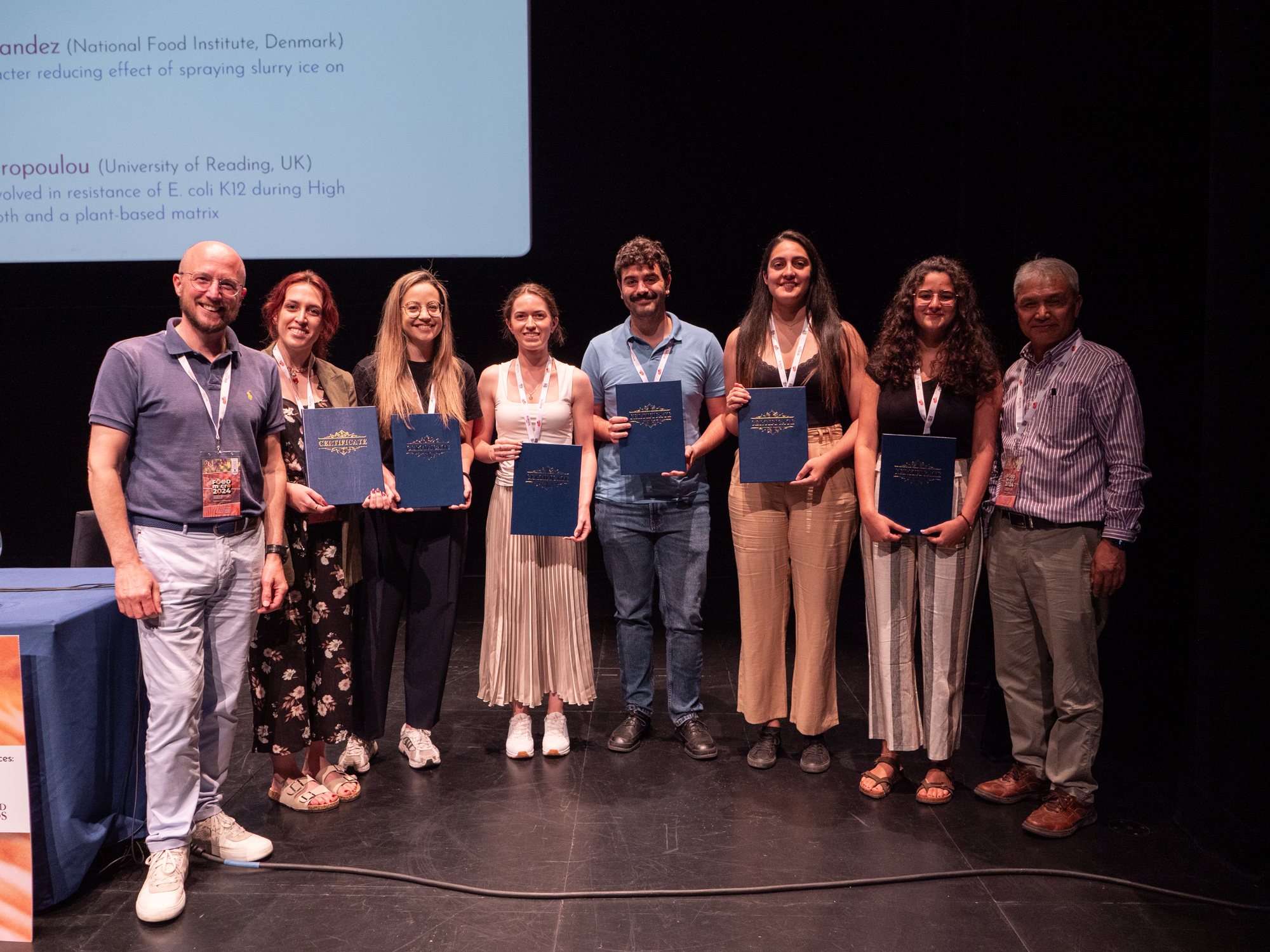
Development of a comprehensive cheese metagenome catalogue reveals potential markers of origin and quality

September 26, 2025

Oral presentation, University of Rome, Rome, Italy

Abstract: Cheese microbiomes shape unique signatures reflecting diverse manufacturing, geographical origins, and potential health benefits. Yet, their diversity and functional links to terroir and bioactive potential remain underexplored. High–throughput shotgun metagenomic sequencing raw reads from curatedFoodMetagenomicData (n=1,044), publicly available dataset (n=233), and newly sequenced Protected Designation of Origin and Protected Geographical Indication cheeses (n=316) were merged and analysed. Furthermore, a metadata collection and standardisation (N_metadata=18) allowed the harmonisation of diverse information about cheeses. Thus, a comprehensive metadata–curated catalogue of cheese microbiomes by collecting a total of 1,593 shotgun metagenomic samples was built. Our findings revealed different values of α– and β–diversity depending on the metadata considered, as well as different distribution patterns of microbes and key functional genes associated with flavour, quality, and health benefits. Explainable machine learning models further elucidated the cheese microbiomes classification among metadata, also suggesting potential biomarkers. Additionally, phylogenetic analyses were employed to investigate strain–level microbial diversity, while functional phylogenomic approaches linked microbial taxa to functional cheese patterns. In summary, our analysis yielded >4,000 metagenome–assembled genomes, significantly expanding existing cheese microbiome repositories by approximately 60%, including previously undescribed taxa. This curated cheese microbiome catalogue advances our understanding of cheese microbial ecology, offering novel insights into microbial contributions to cheese terroir and safety, and supporting future applications for precision fermentation and health–oriented food innovation.

The neuroactive potential of Grana Padano and Parmigiano Reggiano cheese microbiome

April 11, 2025

Oral presentation, University of Copenhagen, Denmark, Copenhagen, Denmark

Abstract: Grana Padano (GP), Trentingrana (TG), and Parmigiano Reggiano (PR) are among the most widely recognised Italian Protected Designation of Origin (PDO) cheeses. Their long ripening process (≥12 months) is characterised by strong proteolysis. During this time, the cheese microbiome plays a chief role in metabolising amino acids, leading to the formation of flavouring and neuroactive compounds. Thus, the present study was designed as a multiomic approach in order to profile the microbiome, the volatilome, and the proteome of GP, TG and PR cheeses. We sampled PDO GP (n=42), TG (n=18), and PR (n=63), and then assessed the microbiome by high-throughput shotgun metagenomic sequencing, the volatile organic compounds (VOCs) by gas chromatography/mass spectrometry (GC/MS), and proteome by liquid chromatography–mass spectrometry/mass spectrometry (LC-MS/MS). Bioinformatic, statistical, and machine learning analysis were performed to investigate the metagenome, volatilome, and metaproteome. Taxonomic profiles revealed a clustering of PR and TG vs GP, suggesting the existence of two groups of cheeses, as also demonstrated by a supervised machine learning classification model. Functional metagenomic analysis further identified protein–coding genes involved in the biosynthesis of neuroactive molecules, including gamma-aminobutyric acid (GABA), serotonin, catecholamines, acetylcholine, indole-3-propionic acid, and conjugated linoleic acids. The presence of the predicted neurotransmitter peptides was also assessed and quantified. By merging metagenomics, volatilomics, and metaproteomics data, a second supervised machine learning analysis helped to explain those features that were most impactful in predicting the two groups of cheeses. Our results demonstrated that, although GP and TG belong to the same PDO disciplinary, their microbiome strongly differ. In addition, long–ripened cheeses are potential sources of psychobiotics, underscoring their importance in promoting mental well-being

Traditional fermented foods as a source of beneficial microbes: a meta-analysis

July 10, 2024

Poster, University of Burgos, Burgos, Spain

Abstract: Fermentation is an optimal strategy to extend the shelf-life of perishable products. Furthermore, it is a sustainable process that increases the concentration of vitamins, essential amino acids and minerals, improving the nutritional value. Also, Fermented Foods (FF) can be a vehicle of beneficial microorganisms. The purpose of this meta-analysis is to provide a worldwide map of the traditional dairy- and non- dairy FFs and of their associated microbiota, also focusing on potential beneficial outcomes for human health. Studies describing the microbiota of traditional FFs through metataxonomic approaches were selected. Metagenomic reads from each study were downloaded from the NCBI SRA database and analysed through DADA2. Our results indicate that traditional FFs are a valuable source of beneficial microorganisms, mostly belonging to the Lactic Acid Bacteria group, with probiotic activities. In addition, we highlighted that most of the currently approved probiotic strains have been firstly isolated from traditional FFs, thus emphasizing the nutritional and beneficial value of these foods for human health. Furthermore, literature suggests that probiotic strains from fermented foods might interact with the human microbiota, not only by establishing themselves, but also by competing for nutrients with potentially hazardous and pathogenic species. This meta-analysis highlights the wide distribution of tradi- tional FFs worldwide and that they are a valuable source of probiotic microorganisms, which might not only establish in the human gut and exert beneficial activities, but also com- pete for nutrients with undesirable species.

Multiomic-based tracking of PDO Buffalo Mozzarella geographical origin

May 21, 2024

Poster, University of Palermo, Palermo, Italy

Abstract: Buffalo mozzarella (BM), a valuable Southern Italian cheese renowned for its distinct flavour and texture, is crafted under strict Protected Designation of Origin (PDO) regulations using traditional back-slopping fermentation techniques. To explore the relationship between microbiome composition, sensory attributes, and geographical origin of PDO BM, we sampled from dairies in Caserta (n=35) and Salerno (n=22), both situated within the PDO territory. Employing high-throughput shotgun metagenomic sequencing, we characterised the microbiome, while gas chromatography-mass spectrometry (GC-MS) was used to analyse volatile organic compounds (VOCs). Streptococcus thermophilus, Lactobacillus helveticus, and Lactobacillus delbrueckii subsp. delbrueckii were identified as predominant microbial species across all samples. Anyway, taxonomic abundance analysis revealed distinct geographic-based microbial groupings, with BM from Caserta exhibiting greater microbial diversity. Volatilome analysis corroborated these findings, demonstrating separate clusters for Salerno and Caserta samples. These results establish crucial connections between microbiome composition, metabolic activity, and geographical origin, enhancing product traceability and safeguarding against fraudulent practices in traditional dairy production.

Microbiome-based tracking of PDO Buffalo Mozzarella geographical origin

September 01, 2023

Poster, University of Parma, Parma, Italy

Abstract: Buffalo Mozzarella (BM) is a typical cheese from Southern Italy with unique flavour profile and texture. It is produced following a detailed Protected Designation of Origin (PDO) regulation, based on a traditional back-slopping fermentation. In this study, we sampled BM from 53 different dairies located in the area of Caserta (n=32) and Salerno (n=21), within the PDO area of production. We assessed Volatile Organic Compounds (VOCs) by gas chromatography-mass spectrometry (GC-MS) and the microbiome by high-throughput shotgun metagenome sequencing. Microbiome taxonomic profiles reveal Streptococcus thermophilus, Lactobacillus delbrueckii subsp. delbrueckii, and Lactobacillus helveticus as the dominating microbial species in all samples. However, the differential abundance of taxa resulted in an evident clustering of the samples based on their geographical origin, also showing that BM from Caserta has a greater microbial diversity. Furthermore, we reconstructed Metagenome Assembled Genomes (MAGs) from metagenomes. Different strains of Lb. delbrueckii were identified in the samples. In particular, cheeses from Caserta and Salerno area showed different strain profiles. Reconstruction of metabolic pathways related to flavour generation was screened, highlighting different abundance of several microbial pathways according to production area, such as superpathway of 2,3-butanediol biosynthesis and S-adenosyl-L-methionine salvage I. These results may explain the specific flavor profiles of BM from Caserta and Salerno. The microbiome may be regarded part of the terroir that links PDO BM with the specific area of production, also contributing to the peculiar sensorial traits. From this perspective, the metagenomic approach could be helpful in tracking the origin of PDO fermented foods.

Fermented foods as a source of beneficial microbes: a meta-analysis

April 19, 2023

Poster, University of Copenhagen, Copenhagen, Denmark

Abstract: Fermentation is a traditional strategy to extend the shelf-life of perishable products. Furthermore, it is a sustainable process that increases the concentration of vitamins, essential amino acids and minerals, improving the nutritional value. Also, Fermented Foods (FF) can be a vehicle of beneficial microorganisms. The purpose of this meta-analysis is to provide a map of the microbiota of traditional dairy- and non-dairy FFs and to investigate the potential beneficial outcomes for human health. Seventy-two studies describing the microbiota of traditional FFs through metataxonomic approaches were selected. Metagenomic reads from each study were downloaded from the NCBI SRA database and denoised through DADA2, then taxonomy was inferred. Furthermore, we identified 30 studies focusing on the health effects of FFs and their potential in modulating the human gut microbiome. Our results indicate that traditional FF are a valuable source of beneficial microorganisms, mostly belonging to the Lactic Acid Bacteria group, with potential probiotic activities. In addition, we highlighted that most of the currently approved probiotic strains have been firstly isolated from traditional FFs, thus emphasizing the nutritional and beneficial value of these foods for human health. Observational and intervention studies found in literature suggest that probiotic strains from fermented foods might interact with the human gut microbiota, modulating its composition and promoting human health. This meta-analysis highlights the wide distribution of traditional FFs worldwide, evidencing the cultural importance of fermentation. Also, our results indicate that traditional FFs are a valuable source of probiotic microorganisms, which might establish in the human gut and exert beneficial activities.

Specific microbiome signatures allow to trace PDO mozzarella cheese geographical origin

April 19, 2023

Poster, University of Copenhagen, Copenhagen, Denmark

Abstract: Buffalo Mozzarella cheese is a traditional fermented food with unique flavour profile and texture that is produced following a detailed Protected Designation of Origin (PDO) regulation, based on a traditional fermentation process. In this study we collected Mozzarella from ten different dairies producing PDO cheese and located in the area of Caserta and Salerno (Southern Italy). We assessed Volatile Organic Compounds (VOCs) by gas chromatography - mass spectrometry (GC-MS) and the microbiome by high-throughput shotgun metagenome sequencing. Hierarchical clustering of VOC profiles highlighted the separation of the samples according to producing area. A similar result was obtained when considering microbiome profiles. Indeed, the species-level taxonomic profiles were similar for all the samples, with Streptococcus thermophilus, Lactococcus lactis, Lactobacillus delbrueckii and Lactobacillus helveticus being the dominant taxa. However, strain-level profiles for the most abundant species allowed to differentiate the cheese origin, with a separation of Mozzarella cheese from Caserta and Salerno. Microbiome can be considered part of the terroir that links typical products with the specific area of production, also contributing to the peculiar sensorial traits. Therefore, we highlighted the possibility of integrating VOC and microbiome profiles to trace the origin of PDO fermented foods, improving traceability and fraud protection.

Novel protein fragments for tomato resilience to salt stress

September 08, 2022

Poster, Catholic University of Sacred Heart, Piacenza, Italy

Abstract: Environmental stresses are critical constraints to crop production. Novel tools, that may improve plant resilience to biotic and abiotic stressors, need to be developed to cope with a growing food demand due to an increasing world population. Understanding and exploiting intrinsic mechanisms of tolerance to multiple stresses in plants is the new frontier, since these often occur simultaneously in natural and agricultural systems. We recently identified two fragments, named PS1 and PS3, in the scaffold of Prosystemin (Prosys), the protein precursor of tomato systemin, a very well-known defense-signaling peptide that efficiently protect tomato plants against Botrytis cinerea and Spodoptera littoralis larvae by inducing defense-related genes. Both fragments belong to the N-terminal region of the scaffold, lacking of systemin sequence. Since it was previously demonstrated that Prosys protects tomato plants also against soil salinity, we analyzed the ability of PS1 and PS3 to confer salt tolerance. We demonstrated that plants treated with exogenous foliar spray of PS1 and PS3, followed by salt stress, were less affected in terms of plant biomass and root area compared to control plants. Treated plants showed a comparable stomatal density to plants non-irrigated with saltwater. Noteworthy, we observed an unexpected growth improvement effect on PS1/PS3-treated tomato plants in the absence of salt stress, making us hypothesize a further activity of these protein fragments as biostimulants and not only as stress protectant. Finally, a gene expression analysis revealed the upregulation of salt stress-related genes such as cat2 and apx2 in all treated plants, showing the activation of antioxidant and scavenging responses in stressed plant cells. Overall, these results lay the foundations for further investigations on the role of PS1 and PS3 in salt stress tolerance and growth enhancement. On a practical aspect, the two protein fragments may be exploited in plant protection strategies against multiple stresses.